What's Really Inside Your Stuffed Animal? Understanding Toy Safety Testing
- by Daniela Hassman
Most people choose a stuffed animal based on how soft it feels, how cute it looks, or who it's made by.
But few people stop to ask an important question:
Has this toy actually been tested for safety?
Whether you're buying a plush toy for a child, a grandchild, or adding a collectible bear to your own collection, understanding toy safety standards can help you make more informed purchasing decisions.
The Hidden Side of Plush Toys
Modern stuffed animals can contain a variety of materials, including:
- Synthetic plush fabrics
- Plastic eyes and noses
- Internal stuffing
- Dyes and colorants
- Labels and printed materials
- Plastic components and fasteners
While most reputable manufacturers prioritize safety, consumers often have no way of knowing what testing has been performed on a particular product.
That's why independent safety testing plays such an important role in the toy industry.
What Chemicals Are Toy Safety Laboratories Looking For?
When plush toys are tested, laboratories often evaluate materials for potentially harmful substances such as:
- Lead
- Cadmium
- Mercury
- Arsenic
- Chromium
- Antimony
- Nickel
- Selenium
- Phthalates (plastic softening chemicals)
These substances are heavily regulated because excessive exposure may pose health concerns, particularly for children.
The goal of safety testing is to ensure that products remain well below established safety limits.
Charlie Bears and Safety Testing
One reason many collectors appreciate Charlie Bears is the company's commitment to product safety.
Charlie Bears requires extensive safety testing on their products before they are sold in many international markets.
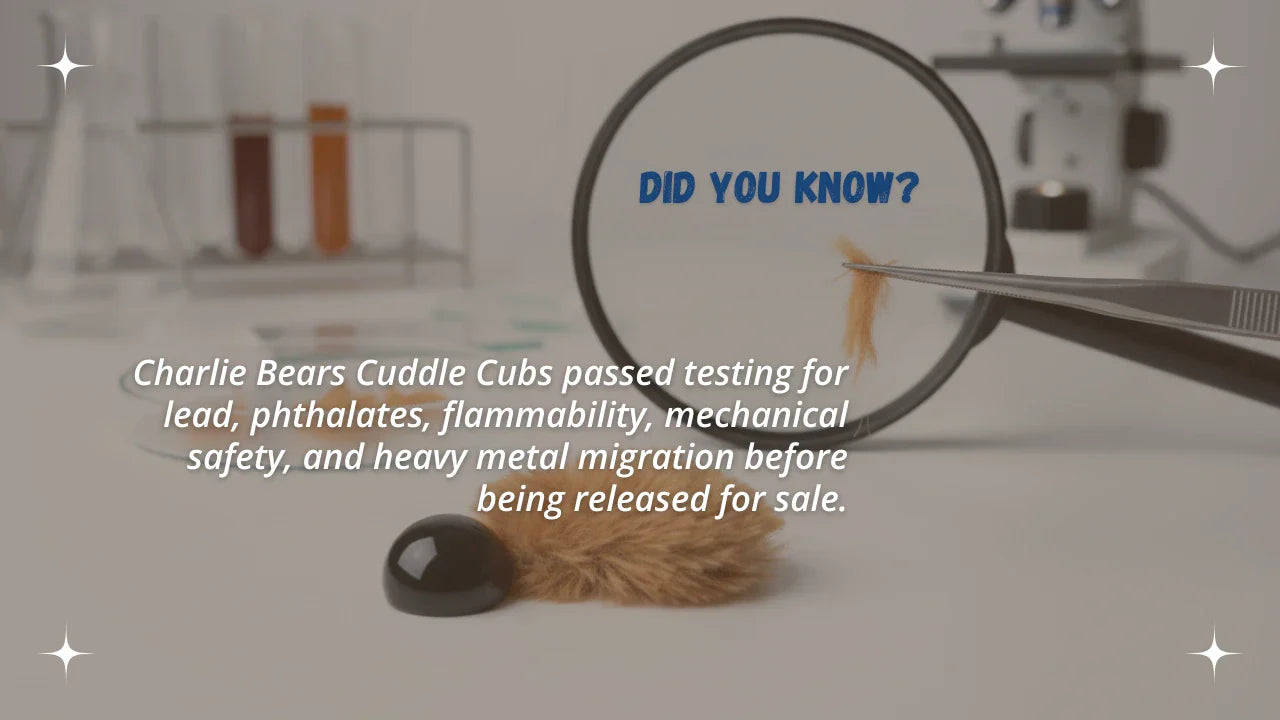
Recent independent laboratory testing performed on Charlie Bears Cuddle Cubs found the products passed:
- EN71 Part 1 Mechanical and Physical Safety Testing
- EN71 Part 2 Flammability Testing
- EN71 Part 3 Migration of Certain Elements Testing
- ASTM F963 Toy Safety Testing
- CPSIA Lead Content Requirements
- CPSIA Phthalate Requirements
The testing covered numerous materials used within the toys, including fabrics, labels, plastic eyes, and other components. The products passed all required testing standards.
Testing for Heavy Metals
One area that often surprises consumers is heavy metal testing.
Laboratories evaluate materials for substances such as:
- Lead
- Cadmium
- Mercury
- Arsenic
- Chromium
Testing performed on the Charlie Bears Cuddle Cubs showed these substances were either undetectable or far below permitted safety limits.
What Are Phthalates?
Phthalates are chemicals sometimes used to soften plastics.
Certain phthalates have been restricted or banned in children's products in the United States and other countries.
Independent laboratory testing on Charlie Bears components found phthalate levels below reporting limits and compliant with CPSIA requirements.
It's Not Just About Chemicals
Safety testing also evaluates physical hazards.
Laboratories test for:
- Loose parts
- Detachable eyes
- Seam strength
- Sharp edges
- Sharp points
- Flammability
- Durability under stress
For example, Charlie Bears products undergo pull tests, seam strength tests, impact tests, and other evaluations designed to ensure components remain securely attached during normal use.
Why This Matters
Most consumers assume that every stuffed animal sold online has undergone rigorous testing.
In reality, safety standards vary between manufacturers, countries, and marketplaces.
When purchasing plush toys, it's worth asking:
- Has the product been independently tested?
- Does the manufacturer comply with recognized safety standards?
-
Can safety documentation be provided if requested?
Reputable manufacturers typically have answers to these questions.
The Plush Teddies Approach
At Plush Teddies, we work with brands that provide documented safety testing and compliance information.
While collectors often choose Charlie Bears because of their personality, craftsmanship, and collectibility, it's reassuring to know that safety testing is also part of the process.
Because when you're bringing home a new bear, you should be able to focus on enjoying it—not wondering what's inside it.
Final Thoughts
The safest stuffed animal isn't necessarily the most expensive one.
It's the one made by a company that takes safety seriously enough to test its products and comply with recognized international standards.
As consumers become more informed, safety testing is becoming just as important as softness, collectibility, and design.
And that's a trend we can all feel good about.